
Summer Workout Area Setup for Small Homes
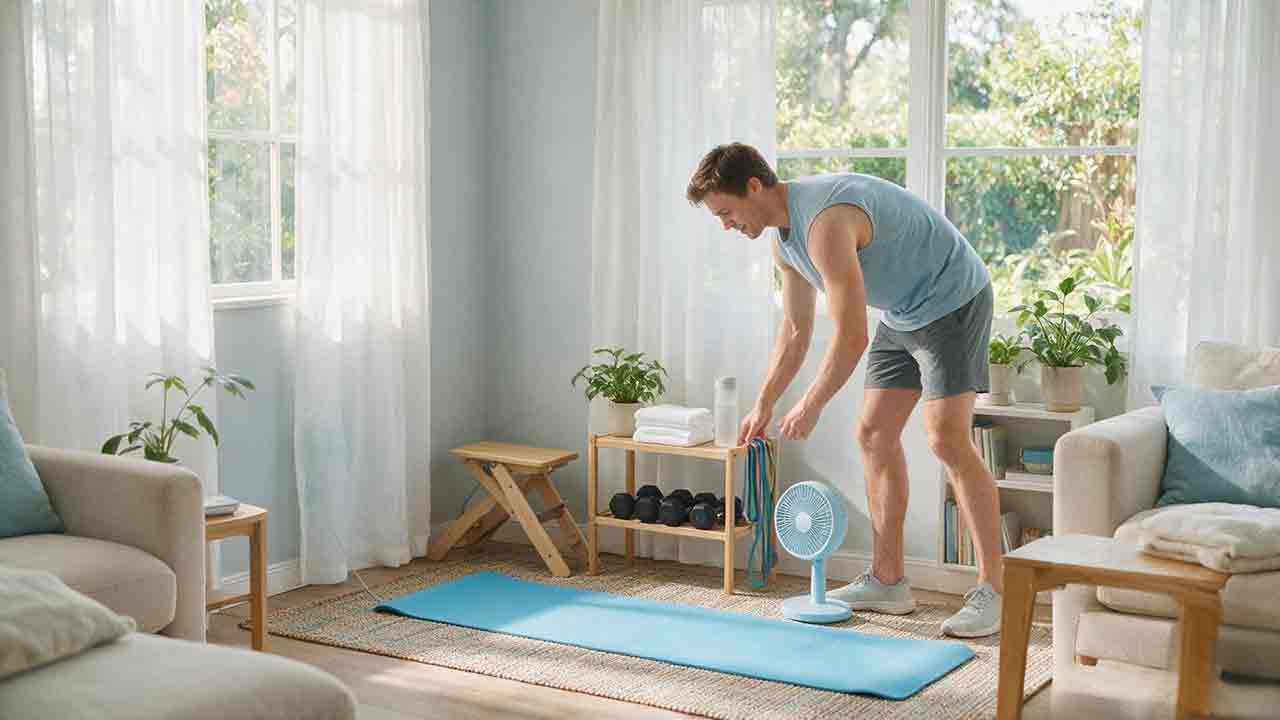
title: "Summer Workout Area Setup for Small Homes"
author: "Olivia Harper"
excerpt: "This article explains how to set up a summer-friendly workout area in a small home without turning the space into a crowded gym. Written for apartments, studios, shared rooms, compact living rooms, and small home offices, it focuses on the real conditions that affect indoor summer movement: airflow, floor stability, reset speed, storage, heat comfort, equipment fit, and household traffic. Instead of starting with gear, the guide begins with the room itself and introduces practical tools such as the BetterHomeFit Summer Setup Principle, a 10-minute workout area audit, a three-zone layout, a two-minute reset rule, and a summer setup scorecard. Readers learn how to choose a cooler practical zone, avoid common setup mistakes, protect floors, manage fans and cords, store gear sensibly, and select movement types that fit the space. The article is designed as a practical home setup guide, not a medical or professional training plan."
categories:
- "Affordable Home Gym Setups"
tags:
- "Affordable Home Gym Setups"
status: Pending
Article type: "Affordable Home Gym Setups"
By: "Olivia Harper"
By Olivia Harper
Published June 10, 2025
A summer workout area in a small home does not need to look like a gym.
It needs to work when the room is warm, the floor is crowded, the fan is already in use, and the best available space is shared with laundry, pets, children, work calls, or dinner prep.
That is the real challenge of summer home fitness in a compact space. It is not always motivation. It is not always equipment. It is whether the area feels clear, comfortable, and simple enough to use on an ordinary hot day.
Many home gym setup guides begin with gear. This one begins with the room.
In summer, a small workout area behaves differently. A corner that felt fine in March can feel stale in July. A mat that stayed flat in winter can shift on a humid floor. A resistance band stored near direct sun can age faster than expected. A walking pad or compact bike can add heat, noise, and cord clutter to a room that already has too many jobs.
The goal is not to build a dramatic home gym. The goal is to create a small, affordable, repeatable workout area that respects heat, airflow, storage, floor protection, and real household movement.
This guide is for apartments, small houses, shared bedrooms, multipurpose living rooms, and tight home offices. It is designed for people who want a summer-friendly workout area without turning their home into a crowded equipment zone.
Scope and Safety Note
This is a practical home setup guide, not a medical, electrical, HVAC, construction, or professional training plan.
It helps readers think through space, airflow, floor stability, storage, and household flow before setting up a small summer workout area. It does not diagnose heat illness, prescribe exercise intensity, certify a room as safe, or explain how to modify wiring, flooring, windows, air conditioning, balconies, or structural features.
For health, equipment, rental, or home safety questions, follow qualified professional guidance, product instructions, lease rules, and applicable local requirements.
Who This Article Is / Is Not For
This article is for you if:
- you live in a small home, apartment, studio, shared house, or compact family space;
- you want a low-cost workout area instead of a full home gym;
- your summer workouts happen indoors because of heat, schedule, privacy, air quality, or convenience;
- you use simple equipment such as a mat, bands, dumbbells, sliders, a folding bench, a walking pad, or bodyweight exercises;
- you need the space to reset quickly after each session;
- you care about floors, neighbors, airflow, storage, and household traffic.
This article is not for readers planning a permanent garage gym, technical home installation, advanced athletic program, or personalized health decision.
The best use of this article is as a planning tool before buying, rearranging, or committing to a summer workout setup.
The Summer Small-Home Problem: Heat Shrinks Usable Space
Small homes already require negotiation. Summer makes that negotiation harder.
In cooler months, the workout question is often:
“Where do I have enough floor space?”
In summer, the better question is:
“Where do I have enough usable comfort?”
That difference matters.
A 6-by-6-foot area may be physically large enough for a mat routine, but it may not be usable if it sits beside a west-facing window at 5 p.m., blocks the only fan path, traps humid air, or forces you to step over cords when you are tired.
A small summer workout area should be judged by four conditions:
- Air movement — Can air move through or across the space?
- Floor behavior — Does the surface stay stable when warm, damp, or sweaty?
- Reset speed — Can the area be prepared and cleared in about two minutes?
- Household compatibility — Can other people still move through the room?
This article uses those four conditions as the setup foundation.
The BetterHomeFit Summer Setup Principle
The most reliable summer workout area is not the biggest area.
It is the area with the least friction.
For small homes, friction means anything that makes you skip, delay, shorten, or dread the workout:
- moving furniture every time;
- searching for a fan;
- stepping over cords;
- wiping sweat from a slick floor;
- overheating near a sunny window;
- disturbing neighbors with jumping;
- leaving equipment out because storage is annoying;
- choosing exercises that need more space than the room can offer.
The BetterHomeFit Summer Setup Principle is:Build the smallest workout area that stays cool enough, clears fast enough, and supports the exercises you actually repeat.
The best summer workout area is not the one with the most equipment. It is the one with the fewest reasons to skip.
That principle prevents a common mistake: designing a space for the workout you imagine, instead of the workout you will do on a hot Tuesday evening.
Utility Box: The 10-Minute Summer Workout Area Audit
Before buying anything, test your current space.
Use this quick audit on a warm day, preferably at the time you normally exercise.
Step 1: Mark the usable floor
Place a towel, yoga mat, or painter’s tape on the floor.
A practical small-home workout zone usually needs one of these:
- Mat zone: about the size of a standard exercise mat;
- Step-back zone: enough room to step one leg backward without hitting furniture;
- Arm-sweep zone: enough room to raise both arms without touching walls, shelves, or ceiling fans;
- Machine zone: the footprint of a folding bike, walking pad, or compact cardio device, plus entry and exit space.
Do not measure only the equipment. Measure your body moving around it.
Step 2: Test air movement
Stand in the area for two minutes.
Ask:
- Does the air feel still?
- Is the room hotter than the hallway or another room?
- Does a fan help, or does it just blow against furniture?
- Does opening a door improve the space?
- Is the area near direct sun?
If the space feels stale before exercise starts, it may not be the best summer location.
Step 3: Test floor stability
Do three slow movements:
- a bodyweight squat;
- a reverse lunge or step-back;
- a plank or hands-on-floor position.
Notice whether the mat slides, the rug bunches, the floor feels sticky, or your hands land too close to furniture.
Step 4: Test reset time
Set up the area from its normal household state.
Then put it back.
If setup and cleanup take more than two minutes, the area may be too complicated for summer consistency.
Step 5: Test household flow
Walk through the room the way people normally move through it.
Look for blocked doors, narrow paths, cords, pet bowls, kids’ toys, laundry baskets, and furniture corners.
A workout area that causes household conflict usually does not last.
Quick result
- If the floor slides, fix the surface before adding equipment.
- If the air feels still before exercise, test another room or another time of day.
- If setup takes more than two minutes, remove one item from the routine.
- If the area blocks daily movement, choose a smaller routine or a different zone.
Choose the Coolest Practical Zone, Not the Prettiest One
The prettiest corner is often not the best summer workout corner.
A sunny window may look good, but it can create glare and heat. A bedroom may be private, but it may hold warmth at night. A living room may offer better airflow, but it needs stricter reset rules.
Instead of choosing by appearance, rank possible locations by summer function.
Living room mat zone
A living room often works well for temporary mat workouts, bands, light dumbbells, mobility, and low-impact movement. It may also have easier access to a fan, air conditioner path, TV, or timer.
The tradeoff is visibility. A living room setup must reset quickly, avoid furniture collisions, and stay out of household traffic.
Bedroom corner
A bedroom corner works well for low-equipment, low-noise routines and privacy.
The challenge is heat. Beds reduce movement options, rugs may shift, and bedrooms can feel warmer during evening workouts.
Home office reset zone
A home office can support short movement breaks, bands, and walking pad use if space and cords are managed carefully.
The main issues are desk cords, chair wheels, tight exits, and limited floor clearance. Treat it as a movement-break zone, not a second gym.
Hallway or entry-adjacent zone
A hallway can work for low-amplitude movement, bands, mobility drills, and short step routines.
But it should never block doors, bags, shoes, deliveries, or daily movement. If a hallway setup creates traffic problems, it will not last.
For most small homes, the winner is not the most inspiring location. It is the location that survives daily life.
The Three-Zone Layout for Small Summer Workouts
Think of the workout area as three overlapping zones, not one empty rectangle.
You do not need walls, screens, or expensive storage. You only need to understand what each zone does.
Zone 1: The Movement Zone
This is where your body moves.
Keep it as empty as possible. The movement zone should not include loose bags, baskets, shoes, toys, glass decor, sharp table corners, charging cords, or unstable furniture.
A good movement zone supports your most repeated movement patterns, not every exercise you have ever seen online.
For summer, prioritize movement that fits the room without chaos:
- mostly vertical movement;
- controlled floor work;
- low-impact stepping;
- short-range band work;
- mobility flows;
- compact machine use only when entry, exit, cords, and storage are clear.
If a movement requires moving furniture, opening a closet, stepping around cords, or worrying about neighbors, it may not belong in your summer home routine.
Zone 2: The Cooling Zone
This is where air moves.
The cooling zone may include a fan, open doorway, shaded window, air conditioner path, or simply the side of the room where air feels less trapped.
A fan should support the workout, not create new problems. Avoid placing it where you will kick it, trip over its cord, block it with furniture, or aim it directly at loose papers and lightweight items.
The U.S. Department of Energy’s Energy Saver guidance on fans explains how fans can support home cooling and comfort when used appropriately. For a small workout area, fan placement should be stable, simple, and outside the movement path.
Zone 3: The Reset Zone
This is where equipment goes when the workout is over.
The reset zone is often more important than the equipment itself.
If your mat, bands, towel, and dumbbells have no clear home, the workout area becomes clutter. If storage is too hidden, you stop using the equipment. If storage is too visible, the room starts to feel messy.
A good reset zone is close to the movement zone, easy to reach, limited to items you actually use, and clear of vents, doors, and walkways.
In a small home, the best storage is not the largest storage. It is the storage that makes tomorrow’s workout easier.
A Practical Equipment List for Summer Small Homes
Buy only after the room test, not before it.
For many small homes, the strongest summer setup starts with fewer items, not more.
Core low-cost setup
A practical starter setup may include:
- one exercise mat;
- one towel;
- one water bottle;
- one small fan if the room needs it;
- one set of resistance bands;
- one pair of light or moderate dumbbells;
- one basket, bin, or shelf for reset storage.
This setup can support strength, mobility, low-impact cardio, and recovery sessions without taking over the room.
Optional upgrades
Only add equipment when you know where it lives.
Possible upgrades include:
- adjustable dumbbells;
- a folding bench;
- a step platform;
- a walking pad;
- a compact stationary bike;
- sliders for smooth floors;
- a wall-safe timer or small clock;
- a thicker mat if your floor needs more comfort.
Before buying, ask:
- Where will it go when not in use?
- Will it make the room hotter, louder, or harder to reset?
- Does it support at least three workouts per week?
- Can I use it without blocking household traffic?
- Can I clean, inspect, and store it easily in summer?
If you cannot answer those questions, delay the purchase.
The Summer Floor Test
Floors behave differently in summer.
Humidity, sweat, bare feet, fans, open windows, and warmer surfaces can change how a mat, rug, or floor surface feels. Before choosing exercises, test the floor under summer conditions.
For hard floors
Check whether the mat slides, whether sweat makes the surface slick, and whether weights leave marks or noise carries through the floor.
A mat can help, but it still needs to lie flat and stay stable.
For carpet
Check whether the mat bunches, whether your shoes catch, and whether balance feels uneven.
Carpet can be comfortable for floor work, but it may not suit quick direction changes or balance-heavy movement.
For rugs
Do not assume a decorative rug is a stable workout surface.
If the rug shifts during lunges, steps, or planks, secure it according to product guidance, move to another surface, or choose slower exercises.
For shared floors
Small homes often mean shared sound. If noise is a concern, favor low-impact, slower, controlled movement over jumping or fast floor drills.
A good small-home workout should not depend on pretending you live alone in a detached gym.
Heat-Aware Setup: Comfort Before Intensity
A summer workout area should make it easy to pause.
Public heat-health guidance, including the CDC’s heat and health resources, tells readers to take unusual discomfort or concerning symptoms seriously during hot conditions.
For this article, the setup lesson is simple: leave room to stop, sit down, lower intensity, move to a cooler space, or seek help if something feels wrong.
For small homes, that means:
- avoid the hottest room when possible;
- avoid direct sun during peak indoor heat;
- keep water nearby;
- leave space to pause or sit down;
- do not trap yourself between furniture and equipment;
- keep a phone accessible if you are exercising alone;
- choose lower-intensity options when the room feels unusually hot.
This is not about fear. It is about making the space honest.
If your room is hot before you begin, your plan should change before your body has to force the issue.
The Two-Minute Summer Reset Rule
A small workout area should reset in about two minutes.
That rule sounds simple, but it changes the entire setup.
If the area takes ten minutes to prepare, summer heat will make the workout feel like a project. If cleanup is annoying, equipment stays out. If equipment stays out, the room becomes cluttered. If the room becomes cluttered, the workout area becomes a source of household stress.
Use this two-minute reset structure.
Before workout
- Move one item if necessary, not five.
- Roll out the mat.
- Place water and towel within reach.
- Turn on the fan or adjust airflow.
- Set out only the equipment needed for that session.
After workout
- Wipe sweat from mat and equipment.
- Let damp items dry before closed storage.
- Return gear to the reset zone.
- Check floor for moisture.
- Clear cords and walking paths.
If your routine needs more gear, separate it into day-specific kits: - Strength kit: dumbbells, bands, towel.
- Mobility kit: mat, strap, small cushion.
- Cardio kit: shoes, towel, fan, timer.
- Walking pad kit: pad, remote, cord path, towel.
Small kits make small homes work better.
Storage That Does Not Fight the Room
Summer storage has two jobs: keep equipment accessible and prevent clutter, odor, heat damage, and household hazards.
Use these rules:
- Store heavy items low.
- Keep cords out of walkways.
- Do not seal damp towels, bands, or mats in closed bins immediately after use.
- Keep fans and machines away from vents, doors, and exits.
- Store small accessories in one visible place.
- Follow product care and storage instructions.
For homes with children, the U.S. Consumer Product Safety Commission’s Anchor It campaign is a useful reminder that household items should not be arranged in ways that encourage climbing, pulling, or unstable stacking.
A small shelf can be useful if it is stable, appropriate for the load, and placed where it does not invite misuse. Loose bands should not dangle across walkways or from unstable objects.
The best storage system is often boring: mat upright in a corner, bands in a pouch, dumbbells low against a wall, towel on a hook, fan near an outlet but outside the movement zone, and machines stored according to manufacturer instructions.
Boring storage gets used.
The Summer Workout Area Scorecard
Use this before buying equipment or committing to a workout corner.
Give each category a score from 0 to 2.
- 0 = problem
- 1 = workable with adjustment
- 2 = strong
1. Air Movement
- 0: The space feels still, hot, or trapped.
- 1: Air improves with a fan, door, or timing change.
- 2: The space feels comfortable enough for light to moderate movement.
2. Floor Stability
- 0: Mat, rug, or feet slide.
- 1: Stable for slow movement only.
- 2: Stable for your planned exercises.
3. Heat Timing
- 0: The area is hottest when you usually exercise.
- 1: A different time of day helps.
- 2: The space works during your realistic workout window.
4. Reset Speed
- 0: Setup or cleanup takes too long.
- 1: It works, but only if you simplify.
- 2: You can reset in about two minutes.
5. Household Flow
- 0: The area blocks doors, people, pets, or daily routines.
- 1: It works with clear boundaries.
- 2: It fits household movement naturally.
6. Equipment Fit
- 0: Gear is too large, loud, hot, or hard to store.
- 1: Gear works if limited.
- 2: Gear supports the routine without crowding the room.
7. Maintenance
- 0: Sweat, dust, odor, cords, or clutter build up.
- 1: Needs a simple cleaning habit.
- 2: Easy to wipe, dry, inspect, and reset.
How to read your score
- 0–6: Choose a different area or simplify the routine.
- 7–10: The space can work with adjustments.
- 11–14: Strong small-home summer setup.
This is a practical friction test, not a safety certification. The score tells you whether the area supports consistency or quietly resists it.
If one category scores 0, fix that issue before adding more equipment.
Sample Setups for Different Small Homes
| Home situation | Best setup | Works well for | Avoid |
|---|---|---|---|
| Studio apartment | Mat beside bed or sofa with one small storage bin | Bodyweight, bands, mobility | Blocking the only walkway |
| Small living room | Temporary center-floor setup that fully resets after use | Dumbbells, step-backs, stretching | Fan cords and coffee table collisions |
| Bedroom corner | Low-gear quiet zone with visible storage | Mobility, bands, evening stretching | Heat buildup and sharp furniture corners |
| Shared family space | Visible reset rule after each session | Short circuits, parent-friendly movement | Loose bands, high storage, blocked paths |
| Small home office | Movement-break zone, not a full gym | Squats, band pulls, walking pad if suitable | Desk cords, chair wheels, narrow exits |
| Use the table as a starting point, not a rulebook. The best version is the one that matches your actual room, heat pattern, and household flow. |
What NOT To Do / Common Mistake
Mistake 1: Buying summer gear before testing the room
A fan, mat, bench, or walking pad cannot fix a bad location.
Test the space first. Buy second.
Mistake 2: Choosing the sunniest corner
Natural light is pleasant, but direct sun can make a workout area hotter and less comfortable. A shaded, less photogenic corner may work better.
Mistake 3: Ignoring the reset problem
If equipment has no home, it becomes clutter. If it becomes clutter, the workout area eventually disappears.
Mistake 4: Treating a fan like a full cooling plan
A fan may improve comfort, but it does not solve every heat issue. Placement, room temperature, humidity, sun exposure, hydration, workout intensity, and personal health factors still matter.
Mistake 5: Using movement that does not fit the room
A small home is not the enemy. Poor movement selection is often the problem.
Choose movement that fits your real space.
Mistake 6: Storing or drying gear poorly
Heavy items should stay low and stable. Damp gear should dry before closed storage. Cords, bands, and accessories should not create trip points or cluttered walkways.
Movement Types That Fit Small Summer Spaces
This section is about space fit, not workout programming.
Use it to check whether your room supports the kind of movement you want to repeat.
| Movement type | Space-fit test | Better fit when | Poor fit when |
|---|---|---|---|
| Low-heat strength | Can you move without stepping around furniture? | The movement is controlled, mostly vertical, and easy to pause | It requires jumping, wide travel, or fast direction changes |
| Mobility and recovery | Can you lie, kneel, reach, or rotate without touching furniture? | The mat stays flat and the room feels calm enough to slow down | The floor is unstable, crowded, or too warm to relax |
| Quiet cardio | Can you move rhythmically without noise or neighbor concerns? | Steps are low-impact and stay inside the marked zone | The routine depends on pounding, bouncing, or fast floor drills |
| Walking pad use | Can you enter, exit, store the unit, and manage the cord safely? | The path is clear and airflow is adequate | It narrows exits, traps heat, or leaves cords across the room |
| The right movement type is the one your room can support repeatedly. If the space makes a movement awkward, simplify the movement before adding more equipment. |
Cleaning and Maintenance for Summer Workout Areas
A small summer workout area needs a small maintenance rhythm.
After each workout
- Wipe sweat from mats, handles, dumbbells, and benches.
- Let damp towels, bands, and mats dry before closed storage.
- Return weights, cords, and accessories to the reset zone.
Weekly
- Check mat edges, floor grip, fan stability, and storage bins.
- Inspect bands for cracking, thinning, or other visible damage.
- Remove items that have drifted into the workout area.
Monthly
- Re-test the room at your real workout time.
- Remove equipment you are not using.
- Adjust storage if clutter is returning.
Maintenance is not about perfection. It is about noticing small problems before they become reasons to stop using the area.
Why You Can Trust This Article
This article was written for BetterHomeFit readers who need realistic home fitness setups, not showroom gyms.
The recommendations are based on small-space constraints: floor clearance, summer heat, airflow, storage, equipment access, household traffic, and reset friction. The article avoids product rankings, medical claims, advanced programming promises, and one-size-fits-all safety guarantees.
Where relevant, the framework draws on public guidance from the CDC, the U.S. Consumer Product Safety Commission, and the U.S. Department of Energy, then translates those boundaries into a practical small-home setup process.
How This Article Was Reviewed
This article was reviewed as a practical home setup guide before publication on June 10, 2025.
The review focused on five questions:
- Does the advice fit small homes and apartments?
- Are the setup steps affordable and realistic?
- Are summer issues such as heat, airflow, sweat, floor stability, storage, and reset time addressed?
- Do equipment suggestions remain general rather than brand-driven?
- Does the article provide useful tools instead of generic motivation advice?
The final version was kept within a practical setup scope.
FAQ
How much space do I need for a summer workout area in a small home?
For many bodyweight, mobility, and band workouts, a mat-sized area plus enough room to step back and raise your arms may be enough. The more important question is whether the area has stable flooring, airflow, and a clear reset path.
Is a fan enough for indoor summer workouts?
A fan may improve comfort, but it should not be treated as a complete heat solution. Room temperature, humidity, sun exposure, hydration, exercise intensity, and personal health factors still matter. If the room feels too hot, reduce intensity, change timing, move spaces, or stop.
What is the best low-cost equipment for a small summer home gym?
A mat, towel, water bottle, resistance bands, and one pair of dumbbells can support many routines. The best equipment is the gear you can store, use, clean, and reset easily.
Should I buy a walking pad for a small home?
A walking pad can work if you have enough floor clearance, cord control, airflow, storage space, and a stable routine. It may not be a good fit if it blocks walkways, adds heat, creates noise issues, or becomes hard to store.
How do I protect floors during summer workouts?
Start with slow movement tests. Check whether your mat slides, whether sweat makes the surface slick, and whether equipment leaves marks. Use floor protection that suits your surface and follow care instructions for both the floor and equipment.
How can I keep workout gear from cluttering a small room?
Use the two-minute reset rule. Keep only the gear needed for your regular routine in the workout area, store heavy items low, give each item a home, and remove equipment you are not using.
Final Takeaway
A summer workout area for a small home should be designed around the space you actually have, the heat you actually feel, and the routine you can actually repeat.
The best summer setup is not the one that looks most like a gym.
It is the one that makes movement easier on the days when your home is warm, your schedule is crowded, and your space has to serve more than one purpose.