
Back-to-School Fitness Ideas for Busy Family Weekdays
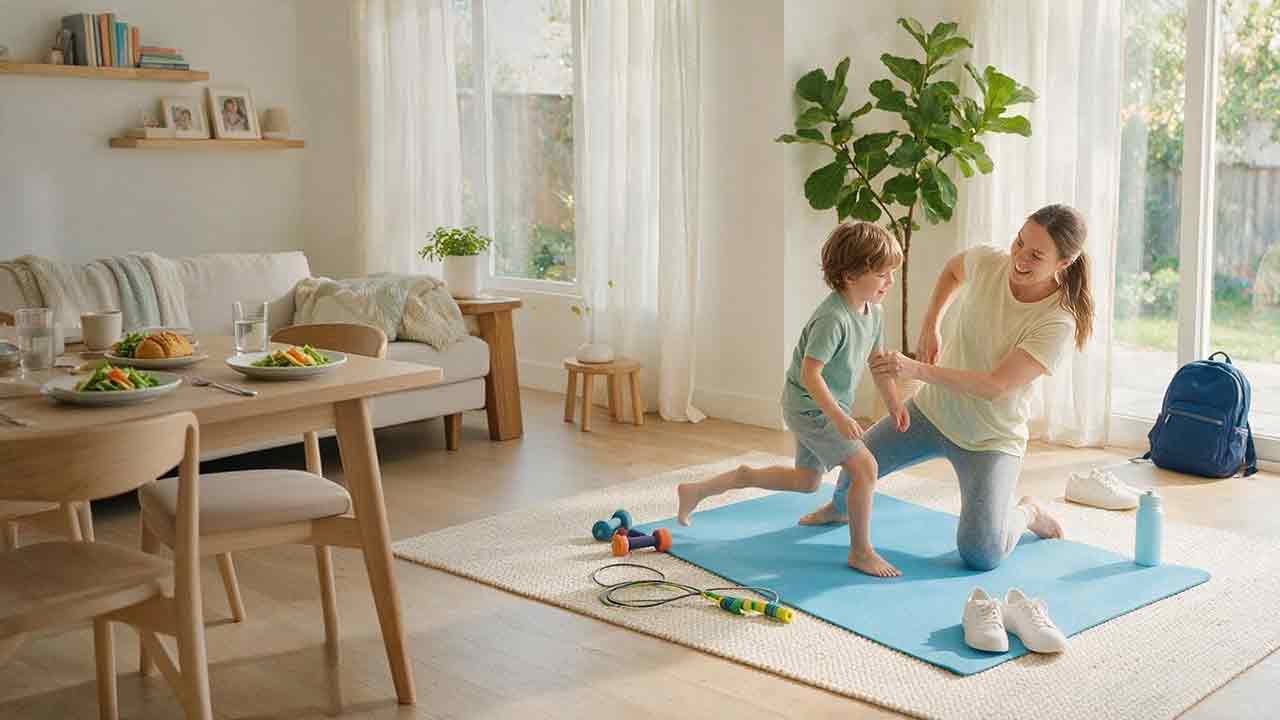
Article type:"Family & Kids Friendly Workouts"
By:"Grace Whitman"
By Grace Whitman
Published: August 12, 2025
Category: Family & Kids Friendly Workouts
Author note: Grace Whitman writes practical home fitness and family routine guides for Better Home Fit, focusing on safe, repeatable movement ideas for everyday households. Before publication, Better Home Fit reviews family fitness articles for practical use, safety boundaries, and avoidance of medical, weight-loss, child performance, or behavior-correction claims.
Back-to-school weekdays can shrink family movement into whatever time is left after lunches, homework, commuting, dinner, forms, laundry, and bedtime. The most workable school-week routines usually begin with one practical idea: families do not need a perfect movement plan. They need small movement moments that fit into routines already happening during the school week.
This article is mainly written for school-week family routines involving school-aged children, with younger children participating only through brief, playful, supervised movement that matches their current abilities.
Quick Start: 7 Back-to-School Fitness Ideas You Can Use This Week
Use this section first if your school week is already full.
- 5-minute morning launch before school
March in place, reach overhead, do slow chair squats, shoulder rolls, side steps, and three deep breaths. Keep it light enough that nobody gets sweaty or late. - 8-minute after-school walk-and-talk reset
Walk outside after pickup or arrival home. Keep the conversation easy. This is a transition from school to home, not a school-day interview. - 4-minute homework movement break
Between seated homework blocks, try wall push-ups, calf raises, shoulder rolls, chair sit-to-stands, or a short hallway walk. - 3-song dance reset before recreational screens
Choose three songs before tablets, games, or TV. Children can lead the moves. No filming, judging, correcting, or body comments. - 10-minute evening wind-down stretch
Use slow marching, side bends, wall push-ups, gentle squats, gentle forward reaches, and breathing before the bedtime routine. - No-jump apartment circuit for rainy days
Use marching, wall push-ups, side steps, seated twists, calf raises, and stretching. Avoid stomping, racing, and loud landings. - Friday family choice movement vote
Let everyone vote: walk, dance, playground, stretching, scooter ride, living room circuit, or active cleanup. Repeat the option that caused the least friction.
All movement ideas are optional. Choose the safest version for your space, floor, noise level, and the youngest child participating. Skip or replace any movement that feels unsafe, stressful, or unrealistic. Use jumping movements only when there is enough space, a stable floor, and adult supervision for younger children. In apartments, crowded rooms, or homes with balance concerns, choose step-ups, side steps, marching, or slow balance moves instead.
What this article does not claim
This article does not replace medical care, physical therapy, school physical education, individualized exercise advice, or guidance from a qualified professional.
It does not diagnose, treat, or prevent any health condition. It does not promise weight loss, improved grades, better behavior, better sleep, discipline, attention changes, or athletic performance.
The ideas here are general family movement suggestions. Families with injuries, chronic conditions, disabilities, pregnancy or postpartum considerations, dizziness, pain, breathing concerns, eating disorder history, or medical restrictions should speak with a qualified health professional before changing activity routines.
Children should not be pushed to exercise through pain, shame, punishment, exhaustion, body-size comments, food guilt, or comparison with siblings.
Who This Article Is / Is Not For
This article is for:
- Families with limited weekday time.
- Parents and caregivers who want simple, non-competitive movement ideas.
- Households trying to interrupt long sitting without creating pressure.
- Families with small spaces, apartments, or rainy-day constraints.
- Caregivers who want movement ideas for before school, after school, homework breaks, or bedtime.
- Adults who want to move with children without adding a complicated separate routine.
This article is not for:
- Athletic training plans.
- Weight-loss plans for children.
- Behavior correction programs.
- Physical therapy or rehabilitation routines.
- Children with medical restrictions who need individualized guidance.
- Competitive sport conditioning.
- Advice that should come from a pediatrician, physical therapist, occupational therapist, coach, or other qualified professional.
A quick note on activity guidance
Public health guidance generally encourages school-aged children and adolescents to get regular daily physical activity, including aerobic activity and age-appropriate strengthening activities. The CDC summarizes youth activity guidance here: CDC Physical Activity Guidelines for School-Aged Children and Adolescents.
Adult activity guidance is different from child guidance. Parents and caregivers can review the CDC’s adult overview here: CDC Adult Activity: An Overview.
For a busy household, movement can come from many places: recess, walking, biking, playground time, physical education, active chores, family walks, dancing, and short home movement breaks.
A school-week home routine does not need to supply every minute of activity. Its job is to keep movement from disappearing when the calendar gets crowded.
The back-to-school fitness problem is not motivation. It is friction.
Many weekday movement plans do not fall apart because families lack motivation. They fall apart because the plan ignores the friction points of a school day.
The morning is rushed. After school can feel uneven. Homework creates long sitting blocks. Recreational screens can start before movement happens. Parents may not have the energy to lead a full routine.
That is why this article uses a simple planning tool: the 4-anchor weekday movement system.
The four anchors are designed to match the moments when family movement most often succeeds or disappears: before school, after school, during homework, and before bedtime.
| Anchor | Best time | Best for |
|---|---|---|
| Morning launch | Before school | A light start without adding a full routine |
| After-school reset | After pickup or arrival home | Transitioning from school to home |
| Homework break | Between homework blocks | Interrupting long sitting |
| Evening wind-down | Before the bedtime routine | Gentle movement and consistency |
| Start with one anchor. Do not try to use all four in the first week. |
The Weekday Friction Audit
Use this audit before choosing a routine. The right movement idea depends on the problem your weekday actually has.
| Friction point | What it usually looks like | Better movement choice |
|---|---|---|
| Morning rush | Everyone is late, looking for shoes, bags, breakfast items, or forms | 3–5 minutes of light movement only |
| After-school transition | A child is hungry, quiet, overstimulated, or resistant | Snack-then-walk, short stretch, or music reset |
| Homework sitting | Everyone sits too long and energy drops | 3–5 minute movement break between tasks |
| Screen transition | Recreational screens start before movement happens | One movement anchor before screens |
| Parent fatigue | Adult has no energy to lead a full routine | Timer-based or child-led movement |
| Small space | No yard, garage, or safe outdoor area | No-jump indoor circuit |
| Noise limits | Apartment neighbors, sleeping siblings, or evening quiet hours | Controlled low-impact movement |
| This audit prevents a common mistake: choosing a routine because it looks good on paper, not because it fits the day. |
Utility Box: The Busy Family Weekday Movement Planner
Use this as a one-minute planning tool.
Step 1: Choose one daily minimum
Pick the smallest version your family can repeat on hard days:
- 3 minutes: one song, one hallway walk, or one stretch.
- 5 minutes: a morning launch or homework break.
- 8 minutes: an after-school reset.
- 10 minutes: a short circuit or evening wind-down.
- 20 minutes: a walk, park stop, bike ride, or family game.
Step 2: Choose one anchor
- Morning launch
- After-school reset
- Homework break
- Evening wind-down
Step 3: Choose one format
- Walk
- Dance
- Stretch
- Slow animal moves
- Wall circuit
- Chair circuit
- Playground stop
- Active cleanup
- No-jump apartment circuit
Step 4: Choose one simple rule
- “Three songs before screens.”
- “One walk before homework.”
- “Stretch after brushing teeth.”
- “Timer on, everyone moves.”
- “Friday family choice.”
Step 5: Choose one backup
- Slow walk
- Seated stretching
- Wall push-ups
- Gentle dance song
- Gentle toy cleanup challenge
- Marching in place
- Breathing and child’s pose
The backup matters. A routine is easier to repeat when it still works on low-energy days.
Anchor 1: The 5-minute morning launch
Morning movement should be short, predictable, and low-conflict. This is not the time for complicated exercises or high-impact activity.
The Backpack Ready Circuit
Do each move for about 30 seconds. Repeat once if time allows.
- March in place.
- Reach overhead and lower arms slowly.
- Step side to side.
- Do slow chair squats.
- Roll shoulders forward and back.
- Rise onto tiptoes for calf raises.
- Do step jacks instead of jumping jacks.
- Take three slow breaths.
For younger children, rename the moves:
- March like a parade.
- Reach like a giraffe.
- Squat to pick up treasure.
- Step over an imaginary puddle.
- Stretch like a sleepy cat.
For older children and teens, avoid babyish framing. Let them choose the music, set the timer, or do their own short stretch.
Keep the morning launch easy. If it makes everyone late, shrink it to one song.
Anchor 2: The 8-minute after-school reset
After school is often a rough transition. Some children come home quiet. Some are full of energy. Some need food before they can do anything else.
Avoid opening with, “Do you want to exercise?”
Try:
“Do you want the walk reset, the music reset, or the stretch reset?”
Option A: Walk-and-talk reset
Walk for eight minutes. Keep questions simple:
- “Do you want quiet or talking?”
- “What snack sounds good?”
- “Was anything funny today?”
- “What should we do first when we get home?”
The walk does not need to solve the day. It creates a physical transition from one part of the day to another.
Option B: Three-song dance reset
Choose three songs. Everyone moves however they want.
Rules:
- No filming.
- No teasing.
- No correcting.
- No body comments.
- Children can lead.
Option C: Hallway movement ladder
Use a hallway, living room, or safe open area.
- 10 steps forward and back
- 9 arm circles
- 8 side steps
- 7 toe touches
- 6 slow squats
- 5 wall push-ups
- 4 frog jumps or step-ups
- 3 deep breaths
- 2 high fives
- 1 sip of water
Use frog jumps only when there is enough room, a stable floor, and adult supervision for younger children. Choose step-ups, side steps, or marching if noise, balance, supervision, or space is a concern.
Anchor 3: The 4-minute homework movement break
Homework can create long sitting blocks. A movement break should not become another assignment.
Try this rhythm:
After one homework task or 20–30 minutes of sitting, take 3–5 minutes of movement.
This is a household rhythm, not a strict rule.
Homework break menu
Choose one.
Wall circuit
- 10 wall push-ups
- 10 wall slides
- 10 calf raises
- 10 shoulder rolls
Chair circuit - 8 sit-to-stands
- 8 seated knee lifts each side
- 8 seated twists
- 8 overhead reaches
Floor reset - 20 seconds child’s pose
- 20 seconds tabletop hold
- 20 seconds cat-cow movement
- 20 seconds rest
- Repeat if useful
If floor movements are uncomfortable, unavailable, or not appropriate for your child, use seated stretches, wall reaches, shoulder rolls, or a short walk instead.
Homework reset walk
Walk through the home and name: - 5 things you see
- 4 things you hear
- 3 things you can touch
- 2 colors in the room
- 1 thing to do next
This is not a promise to improve attention. It is simply a short break from sitting.
For children who dislike transitions, use a visible timer. Tell them when the break starts and when it ends.
Anchor 4: The 10-minute evening wind-down
Evening movement should match the household mood. Some families need quiet stretching. Others need one last playful movement block.
If active games make bedtime harder, choose gentle movement.
The 10-minute family wind-down
- Slow marching
- Arm circles
- Shoulder rolls
- Side bends
- Slow chair squats
- Wall push-ups
- Gentle step-backs
- Gentle forward reach, without pushing or bouncing
- Child’s pose or seated stretch
- Three slow breaths
If floor stretches are not comfortable or not practical, use seated stretches, wall reaches, shoulder rolls, or slow marching instead.
Avoid framing evening movement as a way to “burn off dinner” or “earn dessert.” Movement should not be a payment system for food.
A better phrase is:
“Let’s move a little before we start the bedtime routine.”
Back-to-school fitness ideas by time available
If you have 3 minutes
- Dance to one short song.
- March in place.
- Do 10 chair squats and 10 wall push-ups.
- Walk the hallway.
- Stretch shoulders and calves.
- Do a gentle toy cleanup challenge without running.
If you have 5 minutes
- Do the morning launch circuit.
- Play follow the leader.
- Try slow animal walks if the room is clear.
- Do a no-jump apartment circuit.
- Practice balance on one foot.
- Walk around the block.
If you have 10 minutes
- Complete a simple movement circuit.
- Do a walk-and-talk reset.
- Play balloon volleyball.
- Stretch before bedtime.
- Use a kitchen timer routine.
- Make a pillow stepping path.
If you have 20 minutes
- Take a family walk.
- Visit a playground.
- Ride bikes or scooters where safe.
- Play a backyard or living room game.
- Do active chores together.
- Let the family vote on movement.
The most useful time block is the one that fits the day with the least argument.
A simple five-day family movement plan
This plan uses the 4-anchor system without requiring every anchor every day.
| Day | Main anchor | Movement idea |
|---|---|---|
| Monday | Morning launch | 5-minute backpack ready circuit |
| Tuesday | After-school reset | 8-minute walk-and-talk |
| Wednesday | Homework break | 4-minute wall or chair circuit |
| Thursday | Evening wind-down | 10-minute stretch |
| Friday | Family choice | Vote on walk, dance, park, stretch, or game |
Monday: Keep it small
Use the morning launch before school. If the full circuit is too much, do one song.
Tuesday: Walk after school
Use an 8-minute walk before homework or screens. A quiet walk is still a useful transition.
Wednesday: Interrupt sitting
Use one 4-minute movement break between homework blocks.
Thursday: Lower the intensity
Use the evening wind-down before the bedtime routine.
Friday: Let the family vote
Offer realistic choices. Keep the winner for next week if it worked.
The plan is intentionally simple. A school-week routine should be easy to repeat before it becomes more ambitious.
Small-space and apartment-friendly movement ideas
Not every family has a yard, garage, safe sidewalk, or open basement. Indoor movement can still work when it is controlled and low-impact.
No-jump apartment circuit
Do each move for 40 seconds. Rest for 20 seconds.
- March in place.
- Chair sit-to-stands.
- Wall push-ups.
- Side steps.
- Standing knee lifts.
- Slow wall knee taps.
- Calf raises.
- Seated twists.
- Overhead reaches.
- Slow breathing.
This circuit avoids jumping and loud landings. It is better for apartments, shared housing, rainy evenings, and younger siblings who may already be asleep.
Pillow stepping path
Place pillows or folded towels on a non-slippery floor. Children step from one “island” to another.
Add simple challenges:
- Carry a stuffed animal.
- Move sideways.
- Freeze when music stops.
- Balance for three seconds.
- Step only on certain colors.
Keep the path away from stairs, sharp furniture, glass tables, wet floors, loose rugs, and crowded rooms. For younger children, keep movement playful, brief, supervised, and matched to the child’s current abilities.
Kitchen timer movement
While dinner cools or dishes are being cleared:
- 10 counter push-ups
- 10 calf raises
- 10 slow squats
- 10 side steps each way
- 10 shoulder rolls
This uses waiting time without turning dinner into a workout event.
How to make family movement feel kid-friendly
Children often resist routines that sound like adult obligations. A movement idea usually works better when it includes play, choice, or leadership.
Instead of “do squats,” try:
“Can you pick up invisible treasure?”
Instead of “do cardio,” try:
“Choose two songs and make us copy your moves.”
Useful family roles include:
- Timer captain
- Music captain
- Movement inventor
- Safety checker
- Water reminder
- Cleanup leader
For teens, give more autonomy. A teen may prefer walking with headphones, doing a short strength-style circuit alone, stretching after sitting, or choosing music without being asked to perform for the family.
Adjustments for different ages and needs
Family movement does not require everyone to move the same way.
Preschool and early elementary children
For younger children, keep movement playful, brief, supervised, and matched to the child’s current abilities.
Good options include:
- Slow animal walks if the room is clear
- Freeze dance
- Balloon games
- Follow the leader
- Gentle cleanup challenges without running
Keep instructions short. Demonstrate more than you explain.
Older children
Use light challenges:
- Timed circuits
- Balance games
- Jump rope where there is enough space and a safe surface, or pretend rope steps indoors
- Playground skills
- Simple bodyweight movements
Let children track progress only if they enjoy it.
Teens
Offer choices:
- Walks
- Mobility routines
- Simple strength-style circuits
- Sport skill practice
- Stretching after homework
Avoid forced group enthusiasm.
Adults
Use the family routine as a starting point. Adults may need additional activity across the week for their own health goals, but a short family movement anchor still supports a more active household rhythm.
Children with disabilities or movement limitations
Adapt the activity. Do not treat one movement style as the only valid option.
Possible adjustments include:
- Seated arm movements
- Wheelchair-friendly dance
- Gentle reaching games
- Toss-and-catch games
- Shorter intervals
- Longer rest periods
Families with medical, developmental, sensory, or mobility needs should follow guidance specific to the child.
What NOT To Do / Common Mistake
Mistake 1: Making the plan too big
A 45-minute family routine may look good on paper. It may also collapse by the second week of school.
Start with the smallest useful version: one anchor, one movement format, one backup.
Mistake 2: Using movement as punishment
Do not use movement as a punishment for screen use, homework resistance, food choices, body size, mood, grades, or behavior.
Family movement should feel like a repeatable household rhythm, not a consequence.
Avoid:
- “You ate too much, so exercise.”
- “Do push-ups because you complained.”
- “Run laps because you were on your tablet.”
- “Your sibling is faster than you.”
- “You need to get in shape.”
Use body-neutral language: - “Let’s reset after sitting.”
- “Let’s move before screens.”
- “Let’s stretch before bed.”
- “Let’s take a short walk together.”
Mistake 3: Ignoring the environment
For younger children, movement games should be supervised. Avoid exercises near stairs, glass tables, sharp furniture corners, wet floors, loose rugs, crowded rooms, or unstable chairs.
In apartments or shared housing, choose controlled low-impact movements instead of jumping, racing, stomping, or hallway sprints.
Clear the floor before movement starts. Stop any activity that causes pain, dizziness, unusual shortness of breath, chest discomfort, or distress.
Mistake 4: Turning every activity into a performance
Family movement does not need a score, leaderboard, calorie count, weigh-in, or winner.
Some children enjoy tracking. Others feel pressured by it. If tracking creates conflict or body comparison, remove it.
Mistake 5: Depending on parent energy every time
A routine that requires an adult to lead like a coach every night may not last.
Use timers, music, dice, cards, child-led movement, or simple walk routes. The easier the start, the more likely the routine survives a school week.
Screens and movement order
Screens are part of many family evenings. The practical question is order.
If recreational screens start immediately after school, movement may disappear. A small movement anchor before screens can create a screen-free transition without turning screens into a fight.
The American Academy of Pediatrics offers a Family Media Plan tool for households that want to think through media routines: AAP Family Media Plan.
Movement-friendly screen rules can stay simple:
- “Three songs before tablets.”
- “One walk before games.”
- “Stretch during the first show.”
- “Homework break first, video later.”
- “Walk the dog before the episode.”
Do not frame movement as a punishment for wanting screens. Make it the normal order of the routine.
One-Week Family Movement Review
After one school week, take five minutes to review the plan.
Ask three questions:
- What movement anchor was easiest to repeat?
- What felt stressful, loud, unsafe, or unrealistic?
- What should we keep, cut, or change next week?
Then choose only one adjustment. Do not redesign the whole routine at once.
Keep, cut, change
- Keep: one movement that worked.
- Cut: one movement that caused stress.
- Change: one detail that would make next week easier.
Example: - Keep: Tuesday walk after school.
- Cut: morning jumping because it made everyone late.
- Change: move stretching to after pajamas instead of before dinner.
This review turns the family’s real week into useful information.
FAQ
How do we start if our school week is already overloaded?
Start with one anchor, not a full plan. Choose the lowest-friction moment, such as a 5-minute evening stretch, a short walk before screens, or one movement break during homework. Keep the first week intentionally easy, then use the “keep, cut, change” method to adjust.
How much exercise do kids need during the school year?
Public health guidance generally recommends regular daily physical activity for school-aged children and adolescents, but this article is not a tool for measuring whether a child has met a full daily guideline. A family home routine can support movement during busy weekdays, while activity may also come from recess, physical education, walking, biking, sports, playground time, active chores, and dancing.
Are short family movement breaks useful?
Short movement breaks can be useful because they reduce the barrier to starting. A 5- or 10-minute routine may not replace a full day of activity, but it can help families place movement into a crowded weekday.
What is the best time for family movement on school days?
The best time is the one your family can repeat with the least friction. Many households do well with one of four anchors: before school, after school, between homework blocks, or before bedtime.
What if my child does not like exercise?
Do not start with the word “exercise.” Try dance, walks, playground stops, scavenger hunts, balloon games, pillow stepping paths, active chores, or child-led movement. Choice often helps. Let the child choose music, pick between two options, or invent a move.
Can family movement happen in small homes or apartments?
Yes. Use no-jump movements such as marching, chair sit-to-stands, wall push-ups, side steps, balance games, stretching, and seated movement. Keep noise, floors, furniture, and neighbors in mind.
What should we do if a movement hurts?
Stop that movement. Pain is not a sign that a family routine is working. Try a gentler option or skip the activity. If pain continues, returns, or worries you, contact a qualified health professional.
How This Article Was Reviewed
This article was reviewed for practical family use, legal safety, and consistency with general public guidance available by the publication date of August 12, 2025.
The review focused on:
- Avoiding medical diagnosis or treatment claims.
- Avoiding weight-loss promises for children.
- Avoiding claims about grades, behavior, attention, sleep, or discipline.
- Avoiding body-shaming language.
- Keeping movements general, simple, and adjustable.
- Separating family movement ideas from athletic training plans.
- Including safety reminders for pain, dizziness, supervision, floor space, furniture, stairs, and apartment noise.
- Using stable public health sources rather than trend-based fitness claims.
Sources reviewed
Sources were reviewed during article preparation for general public guidance available by the publication date of August 12, 2025. Because public health pages can be updated, readers should check the linked sources for the most current guidance.
- CDC Physical Activity Guidelines for School-Aged Children and Adolescents
- CDC Adult Activity: An Overview
- Physical Activity Guidelines for Americans, 2nd Edition
- WHO Guidelines on Physical Activity and Sedentary Behaviour
- American Academy of Pediatrics Family Media Plan
This article does not replace professional medical, therapeutic, or educational advice.
Why You Can Trust This Article
Built around real school-week constraints
The routines assume rushed mornings, crowded evenings, small spaces, and limited parent energy.
No weight-loss, grade, behavior, or sleep promises
Movement is treated as a household rhythm, not a cure, correction tool, or child performance strategy.
Practical tools instead of pressure
The Quick Start list, 4-anchor system, Weekday Friction Audit, Utility Box, five-day plan, and One-Week Family Movement Review help families choose what fits. The routine can be reduced, adapted, or stopped when something feels unsafe or unrealistic.
Final takeaway
Back-to-school fitness works best when it fits the weekday instead of competing with it. Choose one anchor first: a 5-minute morning launch, an after-school walk, a homework movement break, or a short evening wind-down. Keep the first week easy, notice what reduces friction, and remove what creates stress. A family routine does not need to be impressive to be useful. It needs to be safe, repeatable, adjustable, and kind.